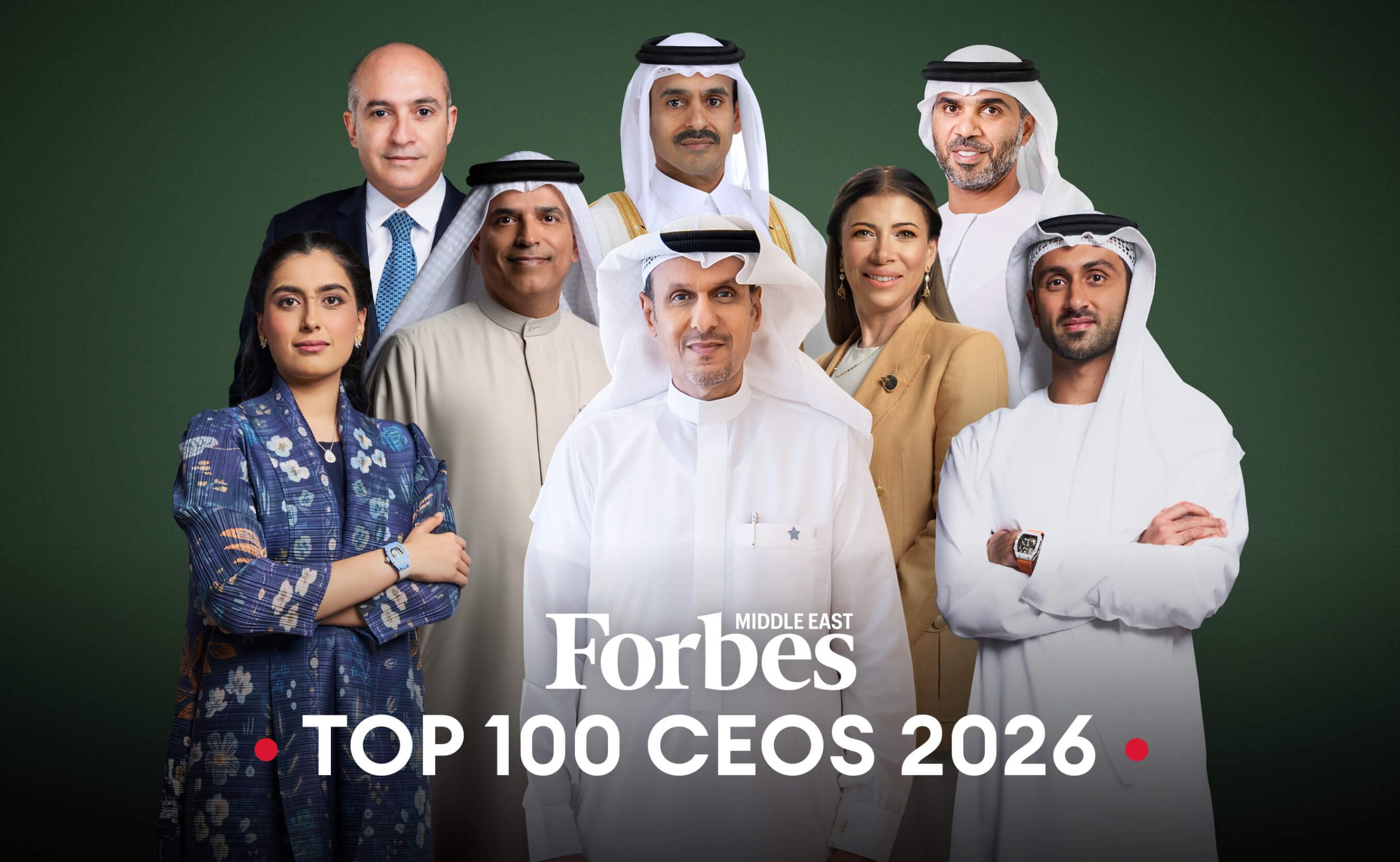
Riyadh – Sharikat Mubasher: Saudi Arabia has secured a strong presence in Forbes Middle East’s Top 100 CEOs 2026, with 13 Saudi business leaders ranking among the region’s most influential corporate executives. Their representation spans some of the Kingdom’s most strategically important sectors, including energy, banking, healthcare, telecommunications, industrial development, investment, chemicals, defense and logistics.
At the top of the regional ranking is Amin H. Nasser, President and CEO of Saudi Aramco, who retained the No. 1 position. His ranking underscores the continued global importance of Saudi Arabia’s energy industry, while also reflecting Aramco’s expanding activities in technology, artificial intelligence, investment and new energy.
Nasser was followed by Nasser Al Huqbani, CEO of Health Holding Company, at No. 7. His inclusion comes as Saudi Arabia accelerates the transformation of its healthcare system under Vision 2030, including the restructuring and privatization of healthcare services.
At No. 9, Waleed Abdullah Al-Mogbel, CEO of Al Rajhi Bank, was the third-highest-ranked Saudi executive. The bank remains a major player in Saudi Arabia’s financial sector, with digital banking, fintech and financing playing an increasingly important role in the Kingdom’s economic transformation.
The telecommunications and technology sector was represented by Olayan Alwetaid, CEO of stc Group, who ranked No. 16. stc has expanded beyond traditional telecommunications into digital infrastructure, cloud computing, artificial intelligence and other technology services, both in Saudi Arabia and across the region.
Tareq Al Sadhan, CEO of SNB Group, ranked No. 19, highlighting the role of the Kingdom’s banking sector in financing businesses, investment and major economic transformation projects.
At No. 22, Majed Al-Argoubi, CEO of MODON, represented Saudi Arabia’s industrial development drive. His ranking comes as the Kingdom continues to expand manufacturing capacity, develop industrial cities, attract investment and increase local production as part of its diversification strategy.
Investment and economic diversification were also reflected in the ranking through Talal Ibrahim Almaiman, CEO of Kingdom Holding Company, at No. 31. The company maintains a diversified portfolio spanning international investments, hospitality, real estate and other strategic assets.
Fahad Bin Abdulaziz AlAjlan, CEO of Ajlan & Bros Group, ranked No. 45. His inclusion reflects the growing role of major Saudi private-sector groups across investment, manufacturing, real estate and international markets.
Meanwhile, Faisal Mohammed Alfaqeer, CEO of SABIC, ranked No. 59. As one of the world’s largest petrochemical companies, SABIC remains central to Saudi Arabia’s industrial development and efforts to strengthen the competitiveness of its manufacturing and chemicals sectors globally.
The Kingdom’s defense industry was represented by Thamer M. AlMuhid, CEO of Saudi Arabian Military Industries (SAMI), at No. 73. SAMI plays a central role in Saudi Arabia’s efforts to localize defense manufacturing, develop domestic capabilities and support the Kingdom’s broader military-industrial strategy.
Logistics and transportation also featured prominently, with Loay Mashabi, CEO of Saudia Cargo, ranking No. 80, followed by Omar Hariri, CEO of SAL Logistics Services, at No. 88. Their inclusion highlights the growing importance of aviation cargo, logistics and supply-chain infrastructure as Saudi Arabia seeks to strengthen its position as a regional transportation and trade hub.
Healthcare returned to the ranking at No. 92 with Awad Al-Omari, CEO of Al Mana Medical Group. His inclusion further underscores the expanding role of private healthcare companies as Saudi Arabia develops its healthcare ecosystem and increases private-sector participation.
Forbes Middle East’s annual ranking evaluates CEOs based on factors including their impact on the region and the markets they serve, professional experience, company size, recent achievements, performance, and innovations and initiatives implemented during the previous year.
The Saudi representation in the 2026 ranking reflects the breadth of the Kingdom’s economic transformation. From Aramco and SABIC in energy and chemicals to Al Rajhi Bank and SNB in financial services, stc in technology, MODON in industrial development, SAMI in defense and SAL and Saudia Cargo in logistics, the executives represent companies operating at the center of Saudi Arabia’s Vision 2030 agenda.
With 13 Saudi CEOs spread across the top 100, the ranking also highlights the growing influence of Saudi corporate leadership beyond the Kingdom’s traditional energy base, as businesses and executives increasingly shape the country’s diversification, localization and investment ambitions.