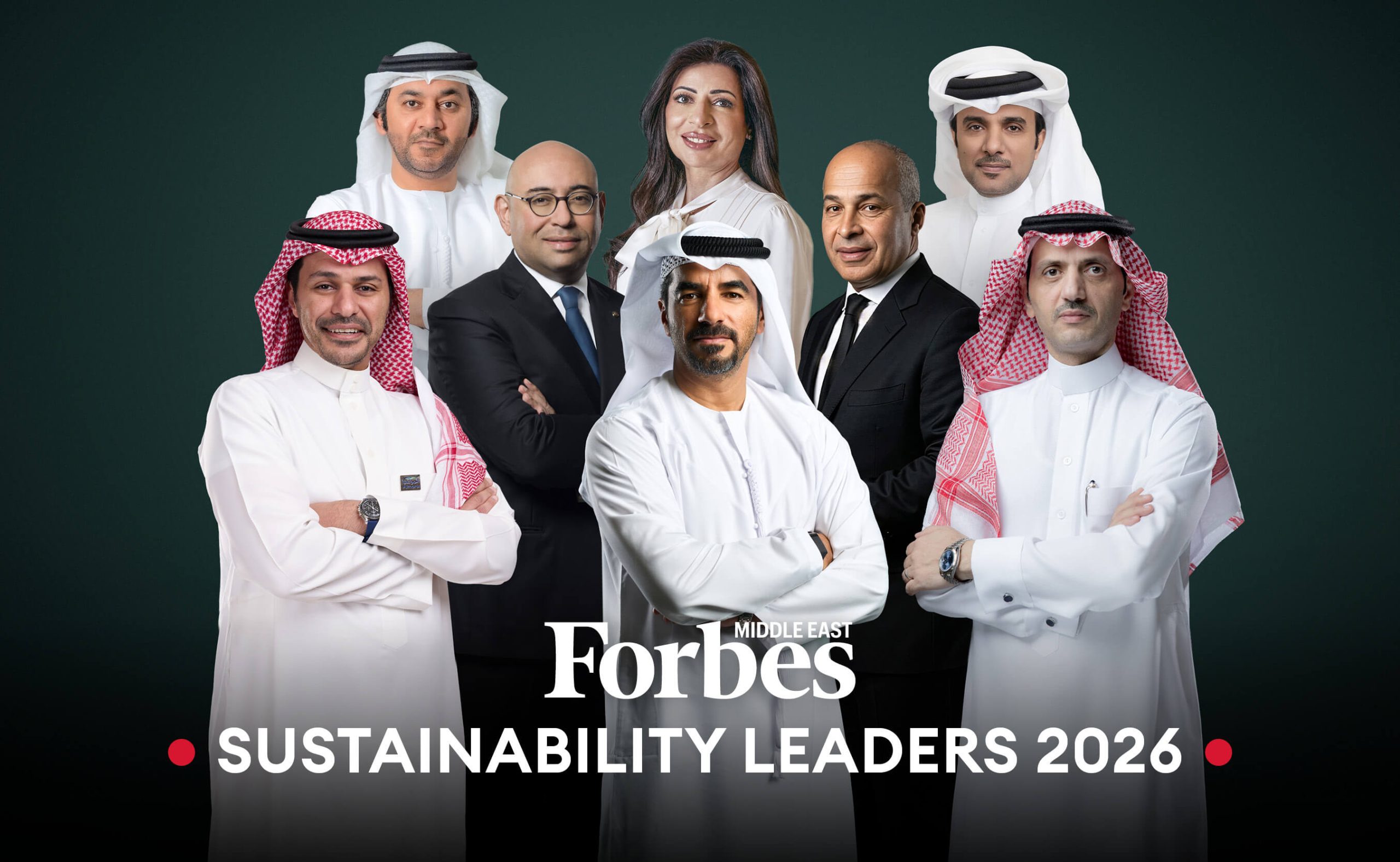
Riyadh – Sharikat Mubasher: Forbes Middle East featured 29 Saudi entries in its Sustainability Leaders 2026 list, highlighting executives from leading companies across the Kingdom who are advancing sustainability initiatives in their respective industries.
The list includes Waleed Al-Mogbel of Al Rajhi Bank, Tareq Al Sadhan of Saudi National Bank (SNB Group), Nadir Ben Sami Al-Koraya of Riyad Bank, and Abdullah Ali AlKhalifa of Alinma Bank in the banking sector.
In energy and utilities, the Saudi executives featured are Khalid AlGhamdi of Saudi Energy, Samir J. Serhan of ACWA, and Mohammed Halawani of the International Water Distribution Company (TAWZEA). The family business category includes Shahad Nejaim of Al-Dabbagh Group, while Rashed Sharif of SNB Capital represents financial services.
The food and agriculture category features Fawaz Aljasser of Almarai, Muhammad Abbas Khan of Tanmiah Food Company, and Sameh Mahmoud Hassan of Savola Group. In healthcare, Faisal Al Nassar of Dr. Sulaiman Al Habib Medical Services Group is among the recognized leaders, while Yasir Al-Rumayyan of the Public Investment Fund (PIF) represents investment and holdings.
Manufacturing and industrials executives include Faisal Alfaqeer of SABIC and Fahad Al-Mishal of the National Industrialization Company (TASNEE). The oil and gas sector features Amin H. Nasser of Saudi Aramco.
In real estate and construction, the list includes Naaman Atallah of ROSHN Group, Raed Albasseet of Red Sea Global, and Sultan Sobhi Batterjee of the International Hospitals Construction Company (IHCC).
The renewable energy category features Khaled Sharbatly of Desert Technologies, while Olayan Alwetaid of stc Group represents technology and telecommunications, and Ahmed Ali Alsubaey of the National Shipping Company of Saudi Arabia (Bahri) represents transport and logistics.
In waste management, the Saudi executives featured are Khaled Alrashed of the Saudi Investment Recycling Company (SIRC) and Faleh Aldossary of Estedama.
The 2026 list includes 145 entries across 17 categories, with Saudi Arabia ranking second regionally with 29 entries, behind the UAE’s 75. Qatar and Egypt recorded 14 entries each.
Forbes Middle East said its methodology considered sustainability reporting, emissions trends, resource consumption, renewable energy adoption, and initiatives undertaken during 2025 and 2026.